Course description

Course Objectives

By the end of this session you will develop an understanding in:

The legal implications of invasive procedures and practitioner requirements.

Strategies for clinical competence and importance of supervision.

Environmental and patient factors that affect the procedure

Consent and documentation

How to prevent and manage infection and use of the non touch technique

Correct documentation and use of specimen bottles.

The circulatory system and how to identify veins for phlebotomy.

Preparing the patient or service user for the procedure.

Preparing equipment and use of correct equipment and safe technique.

Use of needle guage systems and management of sharps.

Common complications and adverse effects from injections.

Recognising and preventing skin trauma or infection.

How to perform procedure safely

Documentation and record keeping.

Course Outline

Review anatomy and physiology of hand veins and injection sites on the body.

Legal and professional issues in performing invasive procedures

Infection control related to giving an injection and in taking bloods.

Understand the different techniques and equipment available for preparing and performing invasive procedures

Discuss indications, contra-indications, and possible complications

Documentation of the procedure and monitoring of the site

Hands on practical sessions for venepuncture and injection technique on life-sized mannequins. Includes IV Cannulation

Develop skills in administering an injection.

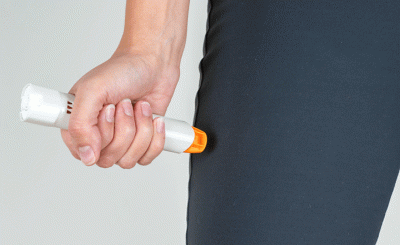
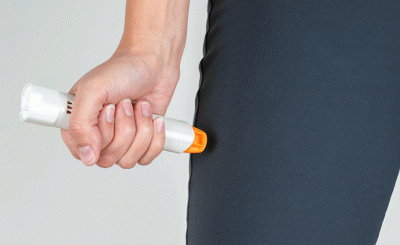
Overview of anaphylaxis

** Limited seats available. **

Recommended Courses

BLS

Anaphylaxis


What will i learn?

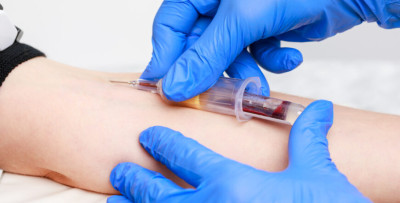
  • This session aims to equip you with the underlining theory and practical skills to gain competence ( with supervision) in drawing up bloods for laboratory investigation, and administering injections such as Vitamin B12 and other intramuscular injections.

Requirements

Frequently asked question

Nurses, Midwives, Health visitors, healthcare assistants, doctors, pharmacists, physiotherapists and clinicians wanting to improve their skills.

Belmatt Healthcare Training

£100

+VAT

Course code

Cpd hours

Quizzes

1

Skill level

Beginner

Expiry period

Lifetime

Certificate

Yes

Related courses

Intermediate

Chronic Disease Management in Primary Care

0

(0 Reviews)

Identify and Assess Chronic Diseases: Recognize the signs, symptoms, and risk factors associated with common chronic diseases. Develop Personalized Care Plans: Create individualized treatment plans based on patients’ specific needs, preferences, and medical history. Implement Treatment Protocols: Utilise appropriate medication, lifestyle interventions, and other therapeutic modalities in line with current guidelines. Apply Preventive Strategies: Implement preventive measures, including screenings, immunisations, and lifestyle counseling. Utilise Technology in Care: Integrate health technology tools, including electronic health records and telemedicine, in patient care. Communicate Effectively: Demonstrate strong communication skills with both patients and interdisciplinary healthcare teams. Evaluate Outcomes: Assess and evaluate patient outcomes, modifying care plans as needed to achieve optimal results. Adhere to Ethical Practices: Practice with ethical considerations, maintaining patient confidentiality and dignity. Engage in Continuous Learning: Recognise the importance of ongoing professional development and evidence-based practice in chronic disease management. Navigate Palliative Care: Provide compassionate palliative care to patients with life-limiting chronic illnesses. Facilitate Community Engagement: Collaborate with community resources and support systems to enhance patient care outside of the clinical setting.

£300